

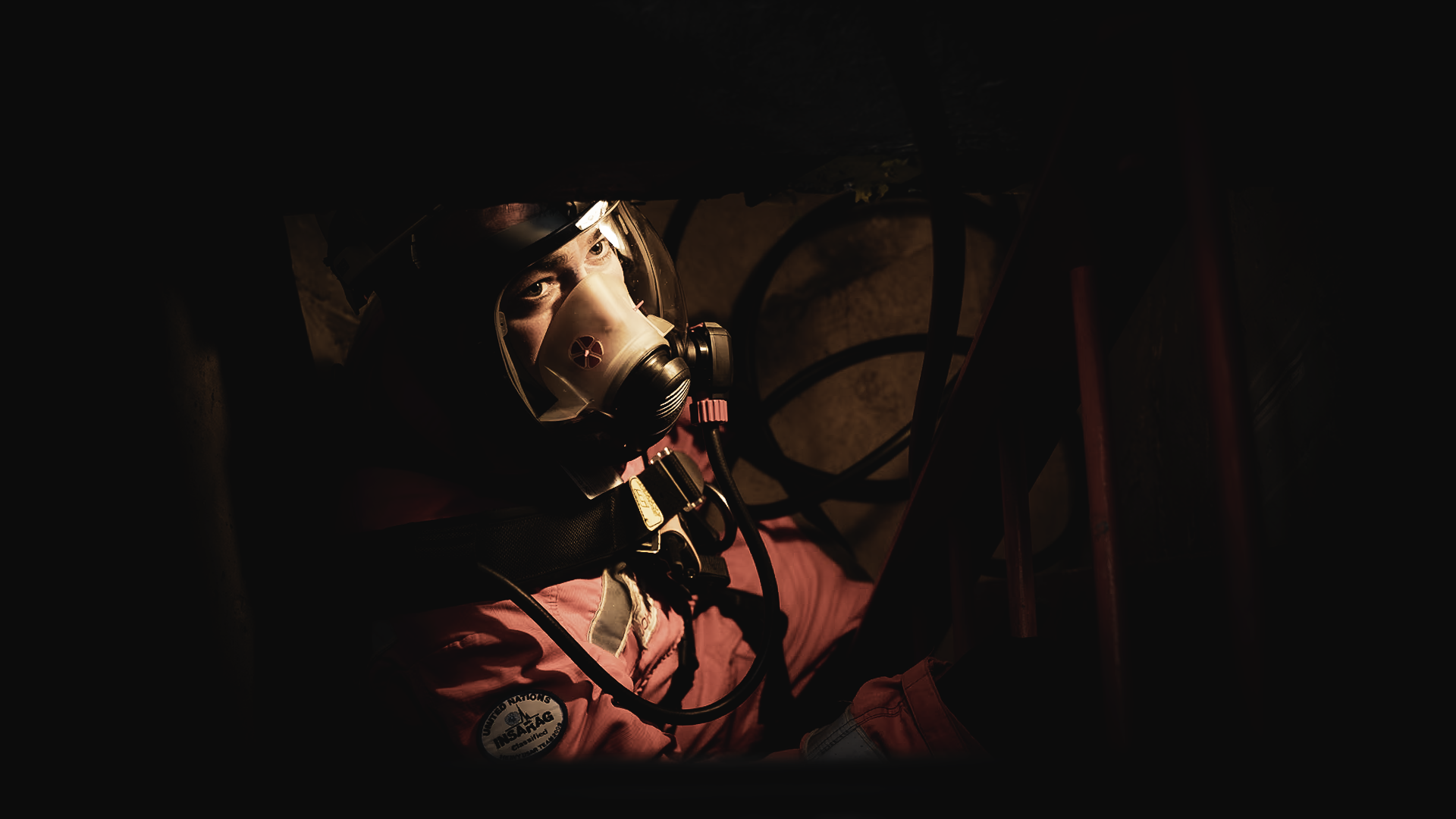
What happens when experienced Fire Service officers put familiar Confined Space practices under fresh scrutiny? Jim Catton reflects on a week of High-Risk Entry and Rescue training with teams from Waterford and Kildare.

Outreach Insights
Written by Jim Catton
Outreach Rescue Instructor
When six serving officers from Waterford and Kildare Fire Services arrived at Outreach Rescue in North Wales, they had a clear purpose: to compare their existing approach to Confined Space entry and rescue with the formal standards and systems applied industry wide.
The three officers from each fire service completed a combined City & Guilds High-Risk Confined Space and Rescue and Recovery programme. It was an intensive week, with both groups engaged fully with the technical content and practical exercises.
What impressed me most was their willingness to challenge familiar approaches, absorb a considerable amount of new information and put it into practice.
Beginning with Risk Assessment
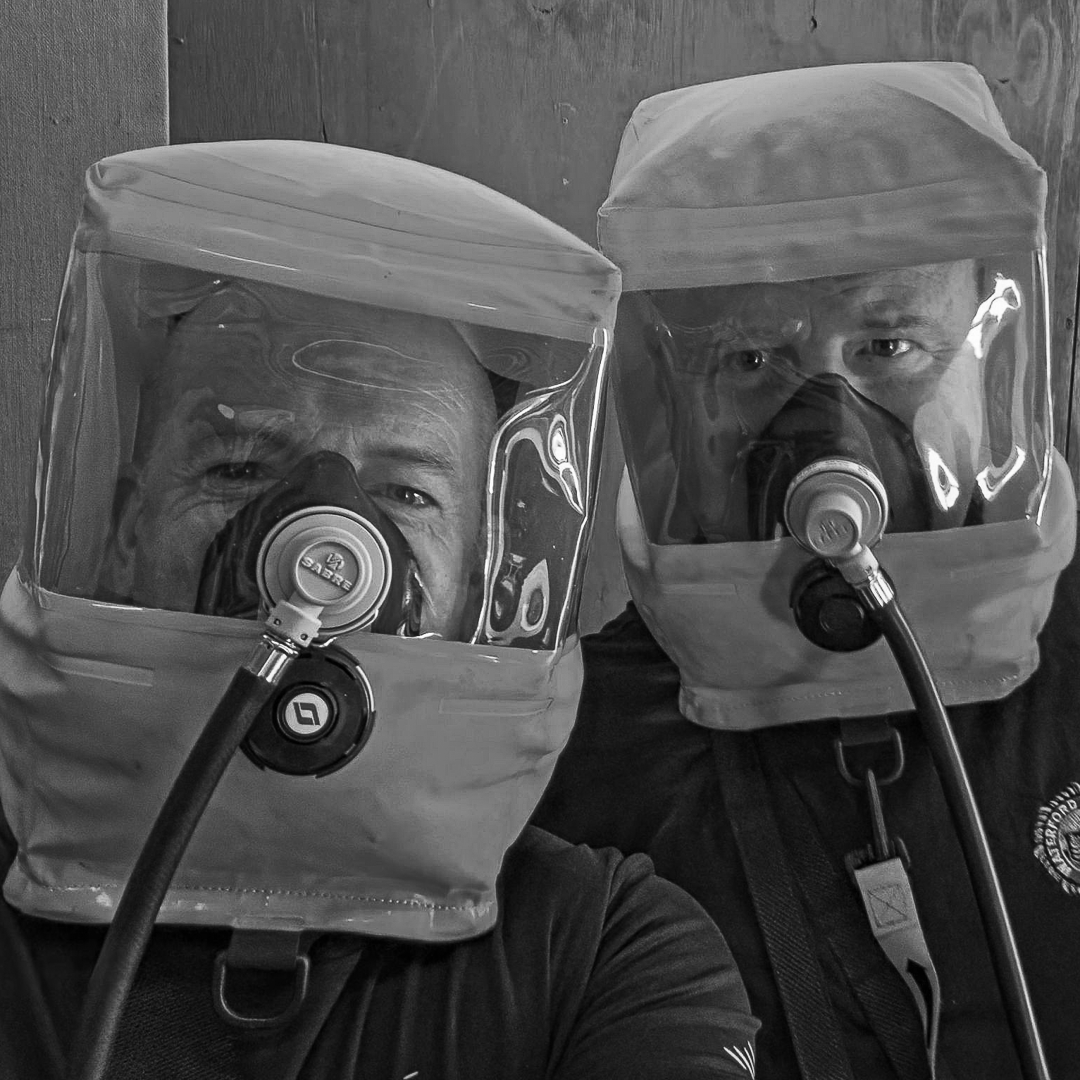
Fire services are understandably accustomed to using full breathing apparatus for Confined Space entry. Industrial Confined Space working requires participants to begin by identifying hazards, risk assessment and developing and implementing a safe system of work.
High-Risk Confined Space training places particular emphasis on risk assessment and atmospheric monitoring. These help a team understand the conditions within a space and identify the controls required before anybody enters.
Breathing apparatus is an essential form of respiratory protection for High-Risk Confined Space work, but it is not the answer to every hazard. Breathing apparatus will not control the risks associated with explosive atmospheres, for example.
That distinction was an important part of the week: equipment selection must follow a suitable assessment of the space and its hazards.
Kilo Delta and Whisky Foxtrot
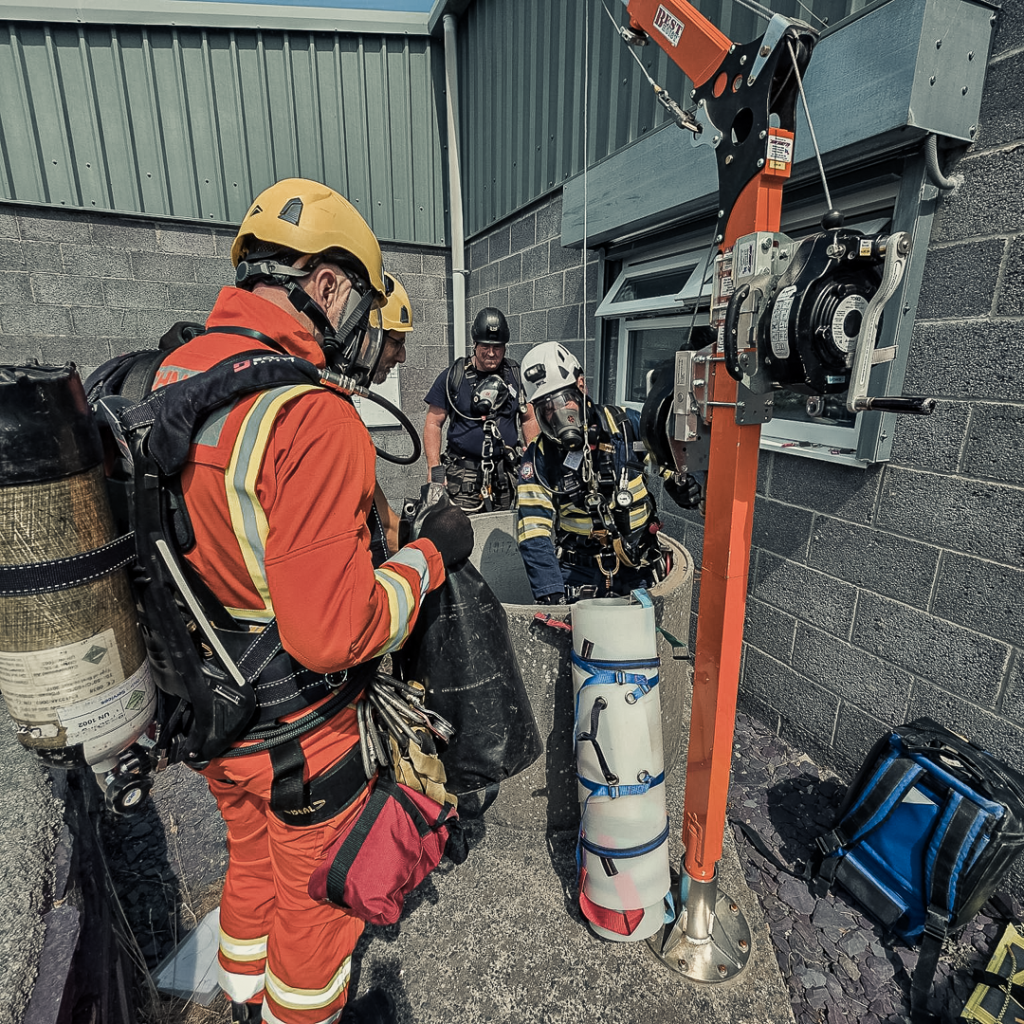
During the practical exercises, I divided the participants into two teams: Kilo Delta for Kildare Fire Service and Whisky Foxtrot for Waterford Fire Service.
There were several reasons for keeping colleagues together.
Firstly, the participants were already under pressure from applying newly acquired knowledge and techniques. Working alongside familiar colleagues removed the additional mental burden of adapting to a completely new team and gave them more space to concentrate on learning.
It also allowed me, as the instructor and assessor, to identify the different strengths and development needs within each service. I could then adjust the practical scenarios and focus the training accordingly.
Finally, a little friendly rivalry lifted morale and encouraged both teams to raise their effort. I think they particularly enjoyed taking turns to act as casualties for the other service to rescue.
Putting Theory into Rescue Practice
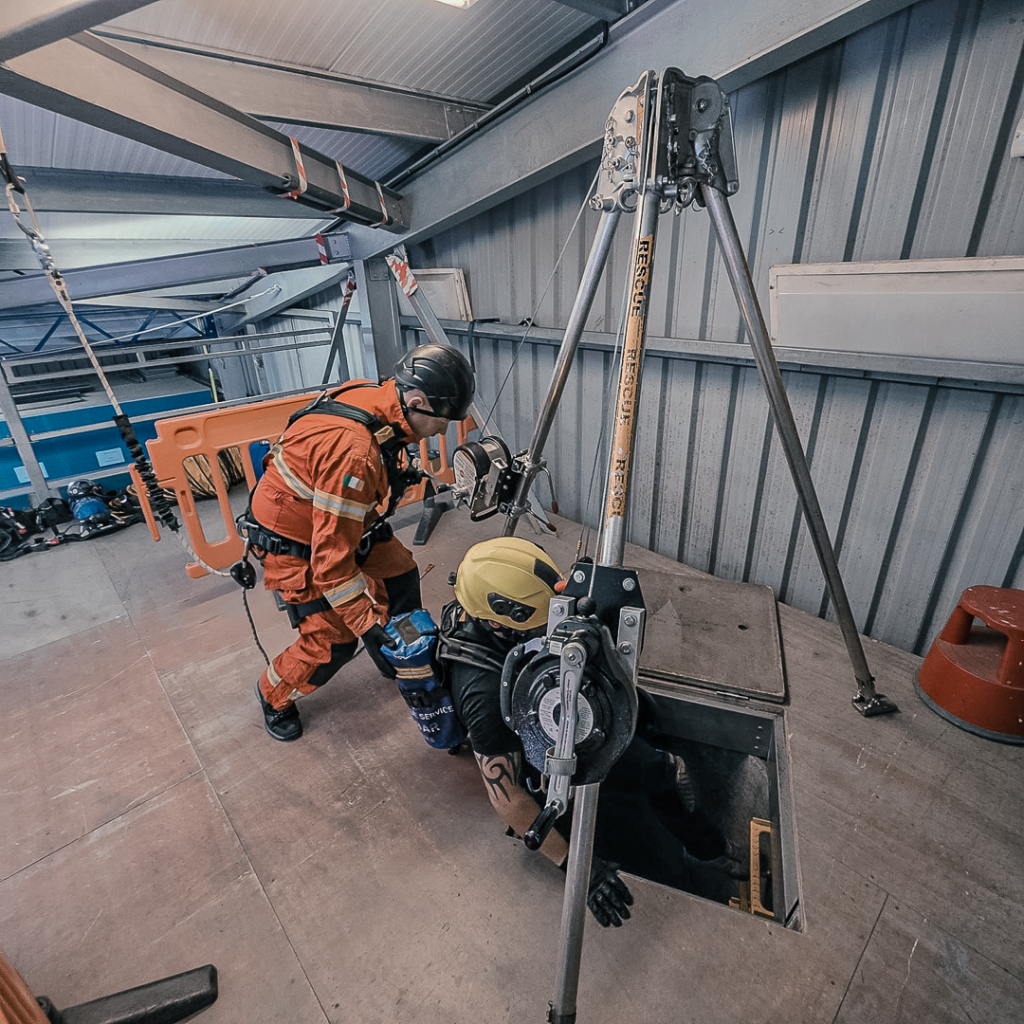
The structure of the combined programme allowed the knowledge developed during the first part of the week to be applied during the rescue drills that followed.
Participants could take what they had learned about risk assessment, atmospheric monitoring and safe systems of work and use it when planning and carrying out the rescue scenarios.
This matters because a rescue must not expose the rescuers to avoidable risk or compound the original emergency. The Irish Health and Safety Authority’s Code of Practice (2005) states that, where entry rescue is necessary, the risks to rescuers must be addressed through the risk assessment and emergency plan.
The course therefore considers more than how to retrieve a casualty. It examines how the rescue team assesses the environment, selects appropriate controls and plans its actions before committing personnel and then observing and responding to changing risk levels in what can be a very dynamic environment.
Preparing for Confined Space Instructor Development
This programme provides an important foundation for the upcoming five-day Confined Space Instructor course planned for Waterford Fire Service in October.
The participants have experienced how the theory can be presented to help entrants understand Confined Space hazards and safe working arrangements. The practical drills have also shown how scenarios can be designed to test decision making and produce specific learning outcomes.
The instructor programme will build on that foundation, helping the Waterford Fire Service instructors develop the knowledge and teaching skills needed to deliver the agreed framework to their colleagues. Course completion is one part of that development, alongside organisational procedures, practice, supervision and continuing professional development.
Next Steps in Waterford
As Waterford progresses towards becoming an Outreach Rescue Approved Centre for training, we look forward to supporting the service in developing a safe system of work for Confined Space entry and rescue training.
The intention is to align this framework with the Irish Health and Safety Authority’s Code of Practice for Working in Confined Spaces (May 2017) and all relevant Irish fire-service Standard Operational Guidance. This will give the instructor programme a defined and consistent framework to work towards.
Outreach Rescue looks forward to visiting Waterford Fire Service later this year, inspecting its Confined Space facility and helping the officers turn the knowledge developed during this programme into structured training for their colleagues.
The instructor programme will give the team an opportunity to build on this foundation and apply it within its own training environment.
Five-Star Feedback
The Waterford participants awarded this programme five stars and said they would highly recommend Outreach Rescue.
Eibhinn Russell (Evan Russell on LinkedIn) of Waterford Fire Service, completing his eighth visit to the Outreach Rescue Centre, said:
“The standard of instruction, facilities and realism at the Outreach Rescue Centre was exceptional. Jim’s knowledge, experience and enthusiasm made for an outstanding week’s training.”
Of the other delegates from Waterford Fire Service, Keith Hayes praised the opportunity to learn and update skills, while Don Lalor highlighted the course structure, atmospheric-monitoring content and relationship between the practical scenarios and operational situations.
Fire and Rescue services currently reviewing their Confined Space training or Instructor-development requirements can explore our Confined Space training courses or contact the Outreach Rescue training team to discuss their requirements.