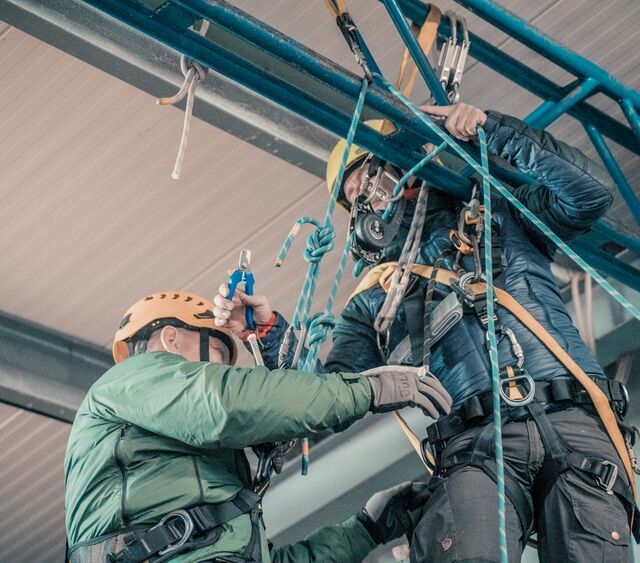

A successful fall arrest is only the beginning. Learn how to recognise the signs of Orthostatic Intolerance during a height rescue, why every suspended casualty should be treated as a priority, and how effective rescue training prepares teams to respond when every second counts.
When a fall arrest system successfully prevents an uncontrolled fall by the user the incident isn’t over. In many cases, the emergency is only just beginning.
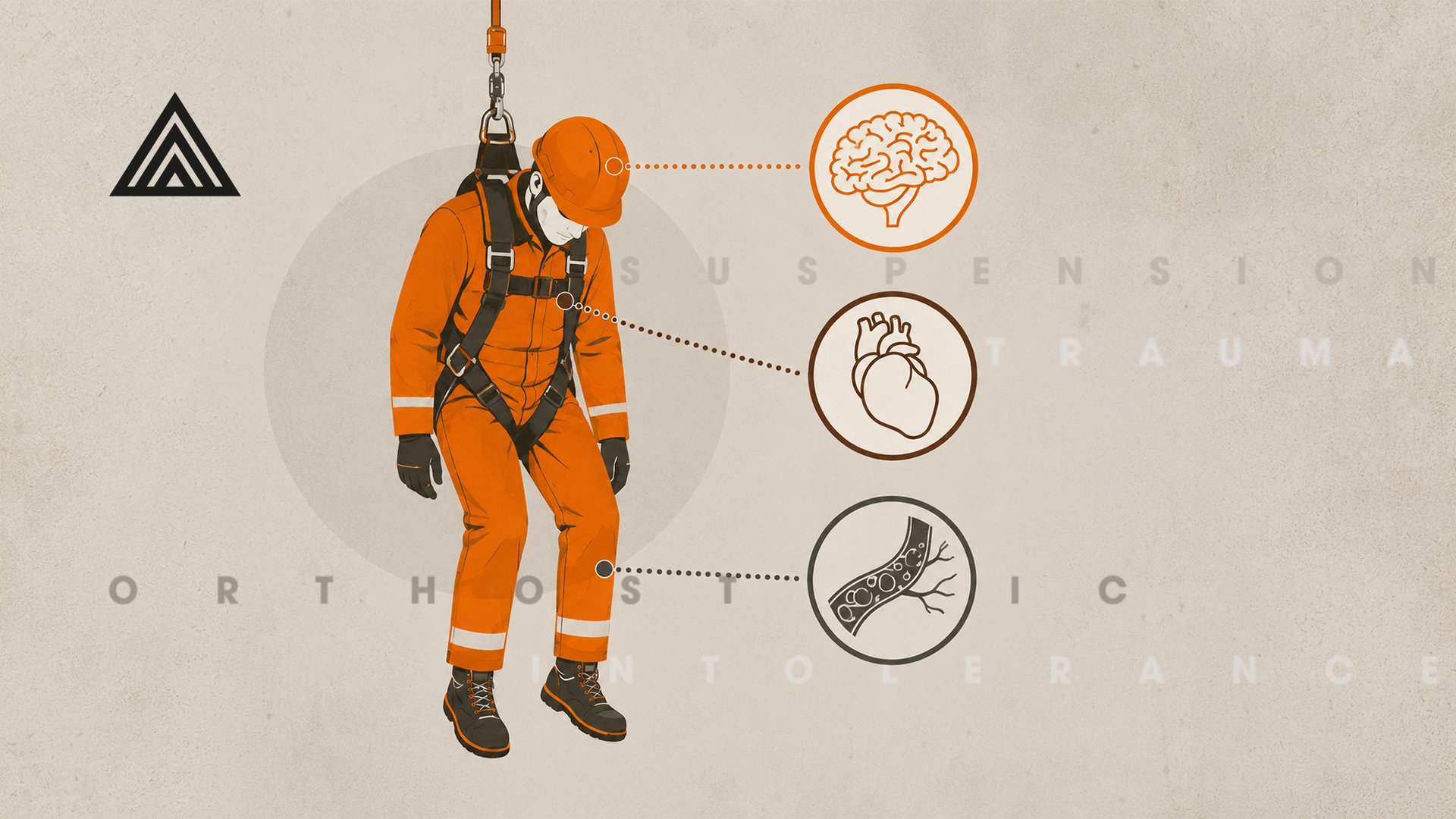
A casualty who remains suspended in a harness may begin to experience orthostatic intolerance – a physiological response that can develop during prolonged motionless suspension.
Many people still refer to this condition as “Suspension Trauma”. While the term remains widely recognised throughout the work at height industry, it is incorrect and current medical understanding uses the term Orthostatic Intolerance to describe the physiological effects of prolonged motionless suspension in an upright position.
Recognising the signs and responding quickly is an essential part of any work at height rescue plan.
What is Orthostatic Intolerance?
Orthostatic intolerance occurs when the body struggles to tolerate an upright position.
Normally, movement of the leg muscles helps pump blood back towards the heart. When a casualty is suspended motionless in a harness, this natural muscle pump becomes less effective.
Blood begins to pool in the lower limbs, reducing blood returning to the heart and potentially decreasing blood flow to the brain.
This is why prompt rescue is such an important objective following any fall arrest.
Recognising the Early Signs
Every casualty is different.
Factors such as heat, dehydration, fatigue, illness and injury can all influence how quickly symptoms develop.
Early signs may include:
- Dizziness
- Light-headedness
- Blurred vision
- Nausea
- Sweating
- Palpitations
- Weakness
- Difficulty concentrating
If suspension continues, the casualty may lose consciousness (syncope).
The onset of symptoms varies between individuals, so rescuers should never rely on a fixed timeline.
Communication is Critical
Whenever possible, maintain communication with the casualty throughout the rescue.
Ask simple questions to help assess their condition:
- Can you tell me your name?
- How are you feeling?
- Are you feeling dizzy or sick?
- Can you move your legs?
- Can you continue talking to me?
Changes in speech, confusion or reduced responsiveness may indicate the casualty’s condition is deteriorating.
Continuous communication also provides reassurance, helping to reduce anxiety during what is often a stressful situation.
Encourage Movement Where Possible
If the casualty is conscious and able to do so safely, encourage them to move their legs.
Activating the leg muscles helps support blood circulation while rescue is being organised.
Where a rescue step or leg suspension strop is included with the harness it may allow the casualty to stand and push against the loops using their legs.
These devices are designed to assist while awaiting rescue.
Although not a substitute for a prompt and effective rescue they may give comfort to the user.
Why Time Matters
One of the biggest misconceptions surrounding suspended casualties is that there is a specific amount of time before they become seriously ill.
There isn’t.
Symptoms vary according to the individual, environmental conditions and the nature of the incident.
For this reason, every suspended casualty should be treated as a priority.
The objective is always the same:
Recover the casualty as quickly and safely as the situation allows.
Rescue Plans Should Never Rely on the Emergency Services
Calling the emergency services is not an essential step during many incidents, but having a complete rescue plan is.
In many workplaces, particularly those involving confined spaces, towers, industrial structures or remote locations, specialist rescue may need to begin long before external responders arrive.
An effective rescue plan should clearly identify:
- The rescue method.
- The equipment required.
- Who will carry out the rescue.
- How rescuers will reach the casualty.
- How the casualty will be transferred to a place of safety.
Regular practice is just as important as having the plan documented.
Medical treatment
Following the recovery of a person who has been subjected to suspension ensure that they are examined by a medical competent person and that the normal medical protocol is followed:
A – Airway
B – Breathing
C – Circulation
Train Before the Emergency Happens
Rescue under pressure is not the time to learn new techniques.
Practical rescue training allows teams to:
- Develop confidence using rescue equipment.
- Improve communication during incidents.
- Understand rescue priorities.
- Identify weaknesses in existing rescue plans.
- Build competence through realistic scenarios.
When an emergency occurs, responders should be able to act quickly, safely and decisively.
Prevention and Preparation Go Hand in Hand
The best rescue outcome starts long before anyone leaves the ground.
Employers should ensure:
- Suitable fall protection equipment has been selected.
- Rescue equipment is immediately available.
- Rescue plans are site-specific.
- Teams understand their responsibilities.
- Rescue procedures are practised regularly.
- Workers know how to raise the alarm without delay.
Preparation reduces uncertainty and helps ensure casualties receive assistance as quickly as possible.
The Takeaway
Orthostatic intolerance is an important consideration whenever a casualty remains suspended following a fall.
Recognising the signs, maintaining communication and carrying out a prompt, well-rehearsed rescue can make a significant difference to the outcome.
At Outreach Rescue, we believe rescue capability should be more than a written procedure. Through realistic training and practical rescue exercises, we help organisations build the competence and confidence needed to respond effectively when every second counts.