

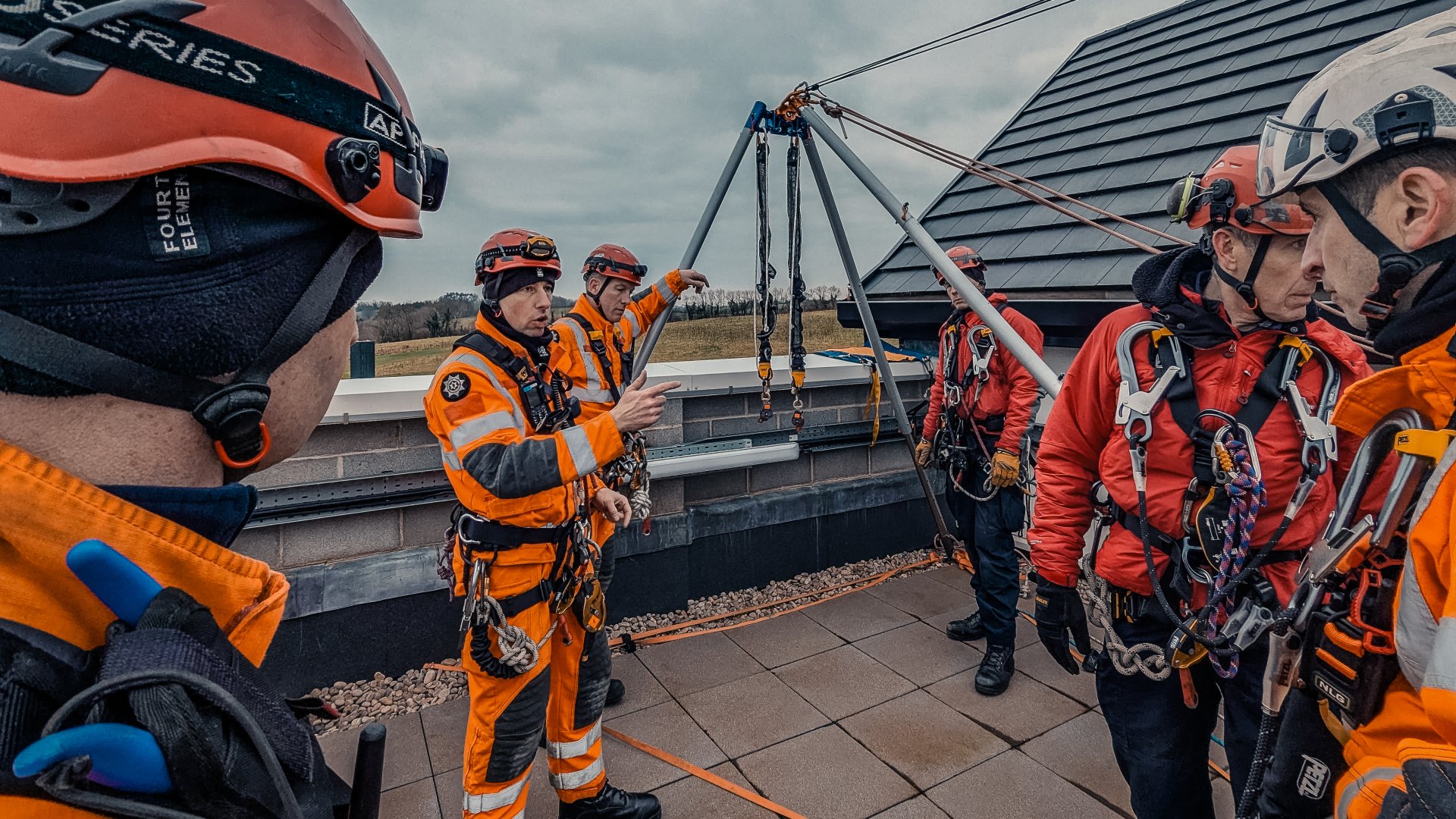
Operational performance is shaped in training. This programme focuses on improving how instructors teach, so responders can think, adapt and perform when it matters.

Outreach Insights
Written by Greg Cain
Technical Training Manager
Why We Created the Emergency Response Instructor Development Programme
Within emergency services, operational competence is shaped long before an incident occurs. It is shaped in training environments, by the quality of the instruction delivered, the decisions the instructors make, and the carefully managed teaching and contextualised learning experiences that responders take away.
For over thirty years Outreach Rescue has delivered specialist rescue training across rope, water, confined space and other high-risk environments. During that time we have developed sector-specific Instructor Awards within these disciplines, enabling services to deliver essential training in-service. We have also assessed thousands of instructors who maintain the technical and safety standards expected within their organisations.
Across the wider Blue Light sector there is no single, uniform structure for training departments. In some services, instructional posts are permanent and well resourced. In others, they are rotational or time-limited. Many instructors balance training responsibilities alongside an otherwise operational career. Some focus on one or two primary disciplines and deliver frequently; others are expected to maintain credibility across a much broader range of skill sets.
As a result, the opportunity to develop and refine instructional practice varies significantly between individuals and organisations.
“The opportunity to develop instructional practice varies significantly between individuals and organisations.”
It is also common across the sector for instructors within training departments to hold generic adult education qualifications such as the AET, alongside vocational assessor awards. These provide instructors with a recognised teaching qualification and are widely used within training departments across the emergency services.
However, the demands placed on emergency response instructors are highly specific. Teaching and assessing practical skills in water, at height, in confined space or other high-risk environments requires more than classroom teaching methods. It requires judgement, adaptability, situational awareness and a clear understanding of how instructional decisions influence how people learn, and how that learning translates into operational capability.
“Teaching in high-risk environments requires more than classroom methods. It requires judgement, adaptability and situational awareness.”
The sector-specific Instructor Awards offered by Outreach Rescue address this to an extent. They apply environment-specific knowledge and techniques, and train instructors to deliver technical content safely within that context. They ensure instructors can run safe training sessions and assess competence within the discipline.
These are credible and well-established qualifications.
However, their focus is necessarily on the technical skills being taught and the safe delivery of that training. Given the amount of technical content that must be covered, and the limited time available on these courses, there is less opportunity to explore the craft of teaching itself in depth.
The primary objective is to ensure instructors can deliver training safely, that their own knowledge and skills are technically sound, and that they can pass this knowledge on effectively while making appropriate judgements about student performance - and they fulfil that purpose well.
However, if we want to truly maximise what learners gain from the time spent training, there is an opportunity to go further.
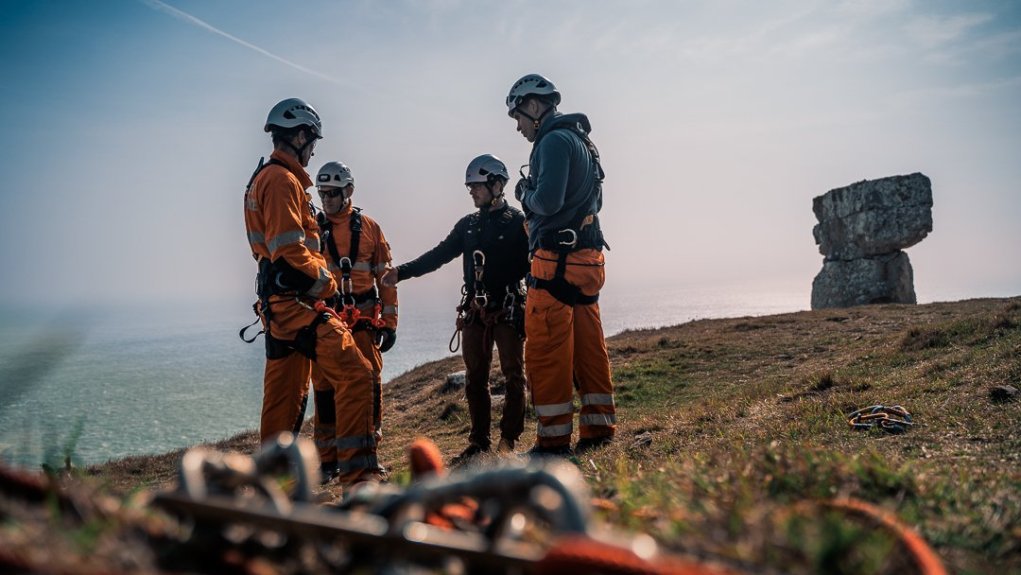
My own background includes time in the recreational outdoor sector, and that experience inevitably shaped some of the thinking behind this programme. In the recreational world, being an instructor is very much a profession in its own right rather than simply one element of a broader role. For many people it becomes a lifelong career, and as a result individuals often become exceptionally skilled at the craft of teaching.
In that environment instructors rely heavily on reputation, repeat engagement and word of mouth. The quality of teaching is therefore judged not only on safety, but also on the value it provides to those attending. People invest both time and money to develop their skills, so good instruction is expected to be effective, engaging and directly relevant to their needs. Enjoyment also plays an important role. Training that is engaging and enjoyable tends to produce better learning outcomes, and the most effective instructors understand this well.
As a result, there is sustained attention on how people learn practical skills, how instruction can be adapted to different individuals and how to develop performers who can think, judge and adapt rather than simply repeat familiar routines. Crucially, experienced instructors recognise that each learner will have different needs and respond differently to instruction. Part of the instructor’s role is understanding those differences and adapting accordingly.
“Effective instruction develops people who can think, judge and adapt, not simply repeat routines.”
When working more closely within the emergency services training environment, it became apparent that while the operational context differs, the environments, the risks involved, the need for situational awareness, the influence of human factors and the principles of learning are remarkably similar.
Many emergency response instructors are highly competent and operationally experienced. However, beyond their technical instructor awards and generic teaching qualifications, there are fewer opportunities for structured development in the craft of teaching itself, particularly within the types of high-risk, dynamic environments that emergency services operate in.
Training departments themselves frequently recognise this challenge. Basic teaching and assessment qualifications produce basic capability, but they do not guarantee the confidence, consistency or depth required when instructors are expected to deliver training well beyond that level.
The Emergency Response Instructor Development Programme was developed in response to that need.
The programme has been designed by Outreach Rescue in collaboration with Dr Loel Collins of the University of Edinburgh, whose work in coaching, instructor development and learning in complex environments has helped shape its design.
Together, the programme brings practical experience from more than three decades of rescue training together with current research into how adults learn complex skills in demanding environments.
This programme does not replace sector-specific Instructor Awards. Instead, it builds on them.
Where technical instructor awards establish the ability to deliver training safely within a discipline, this programme focuses on improving the quality and effectiveness of the teaching itself.
By examining how people actually learn practical skills, and how instructors influence that process, the programme equips instructors to deliver training that is more adaptive, more engaging and more closely aligned with the demands responders face operationally.
Because when training time is limited, the quality of instruction becomes one of the most important factors influencing operational readiness.
“When training time is limited, the quality of instruction becomes critical to operational readiness.”
At its core, the programme examines how adults learn practical skills and how instructor behaviour shapes both learning and operational performance. If teaching becomes overly rigid or formulaic, performance often mirrors that rigidity. If instruction is adaptive, reflective and informed by good learning practice, responders are more likely to demonstrate judgement and flexibility when conditions change.
The programme explores, in practical terms:
- How to structure learning effectively within dynamic operational environments
- How to use the powerful learning that comes from mistakes without compromising safety
- How to judge when to intervene - and when not to - and understand how those decisions affect learning, confidence and assessment reliability
- How to develop situational awareness rather than simply reinforce procedural memory
- How to deliver feedback that genuinely improves performance
- How to design lesson plans as flexible frameworks that support decision-making rather than fixed scripts
- How to align learning outcomes, delivery methods and assessment so training programmes make sense to both instructors and learners
- How to move from introductory instruction towards longer-term coaching and mentoring within operational teams
In essence, the programme focuses less on technical skill acquisition and more on the quality of the teaching that supports it.
The course itself is delivered in the style it promotes. Theory is combined with practical teaching both inside and outside the classroom. Delegates teach, review, refine and reteach. Reflection is focused on improvement: what changed, why it changed, and whether learner performance improved as a result.
Participants initially receive an Outreach Rescue Certificate of Attendance, with the option to complete a structured post-course submission leading to a Certificate of Achievement for those wishing to demonstrate deeper application of the principles.
Who This Programme Is For
This programme supports a range of roles within emergency services.
It is not limited to rope, water or confined space disciplines. The principles apply equally to instructors delivering training in areas such as large animal rescue, RTC, breathing apparatus, trauma care, heavy rescue or any other operational discipline where complex practical performance is required.
While environments may differ, the instructional challenges; judgement, adaptation, feedback quality and reliable assessment - remain remarkably similar.
For full-time training department staff, the programme provides a clear framework for designing and improving training programmes from the ground up. It strengthens the link between learning objectives, how training is delivered and how competence is assessed.
For watch-based instructors, it provides practical tools that increase confidence when adapting sessions for experienced learners. It supports a move towards longer-term coaching and mentoring, helping instructors move beyond repetitive “teaching the same things again” sessions and reinvigorating training.
For experienced instructors, it offers the opportunity to refine and elevate practice beyond the technical baseline established by discipline-specific instructor awards.
For newer instructors, it establishes strong foundations early, helping them avoid simply copying existing delivery styles.
For training managers, it provides reassurance that instructor capability is being developed deliberately rather than assumed through qualification alone. It also supports internal quality assurance and provides a clearer pathway for instructor development. Where training managers are also responsible for designing courses for internal delivery, the programme equips them with the skills to build courses from the ground up, ensuring that the materials provided to instructors support effective delivery rather than constrain it, and enable instructors to make the most of the training they deliver.
What This Means for Services
“Operational competence is shaped by instructional competence.”
For services, the value of this programme is practical and measurable.
Developing instructors at this level can support:
- Greater consistency across instructors, regardless of how frequently they teach
- Greater operational adaptability within teams
- Increased confidence in assessment decisions
- Improved learner engagement and knowledge retention
- Fewer course deferrals or remedial training requirements
- Stronger alignment between training and operational demands
- Improved internal quality assurance
- A shift away from purely qualification-driven training towards instruction focused on real performance
Where appropriate, it may also allow services to reduce reliance on multiple generic teaching qualifications, saving both time and cost while developing stronger and more relevant instructional capability.
Operational competence is shaped by instructional competence.
If the aim is to produce responders who can operate confidently in dynamic, high-risk environments, then the development of those who train them must be deliberate, relevant and effective.
This programme exists to strengthen that foundation.