

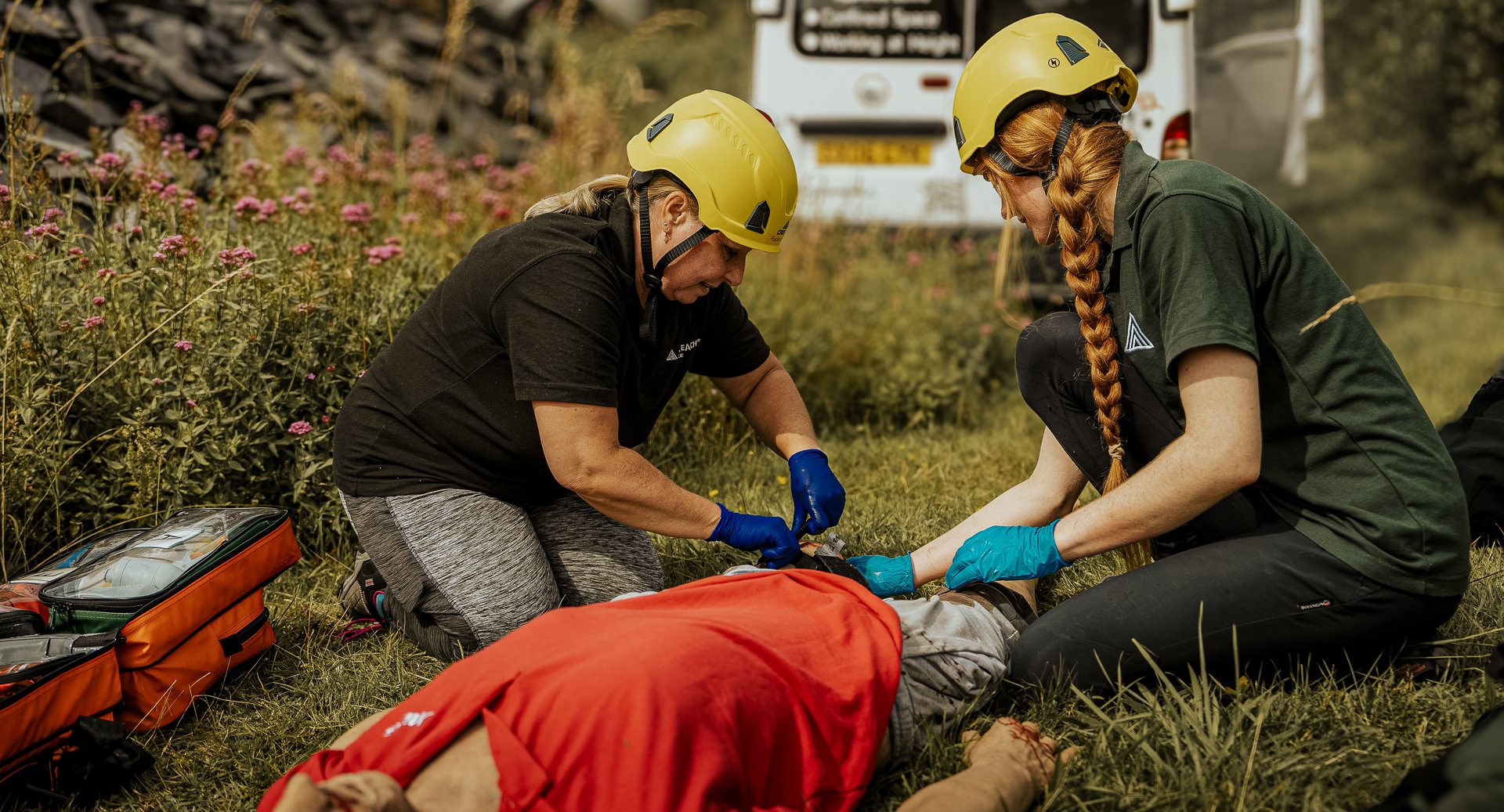
When catastrophic bleeding occurs, the first few minutes matter most. Confident bystander action can mean the difference between life and death.
Outreach Insights
Written by Rachel Smith
Clinical Tutor
Why Early Bleed Control Saves Lives Before the Ambulance Arrives
When catastrophic bleeding occurs, the first few minutes matter most. Confident bystander action can mean the difference between life and death.
Paramedics are prehospital specialists and problem solvers. Our job is not to diagnose, but to assess, treat and find the best pathway for the patient's needs, whether that is to stay at home, refer to another service, or take them to hospital.
But there are many instances where the immediate actions of bystanders, while waiting for an ambulance to arrive, is what makes the biggest difference. In a cardiac arrest situation, starting CPR and attaching a defibrillator early will give the patient the best chance of survival. The same goes for managing a catastrophic bleed.
There are many reported instances where a catastrophic bleed left unmanaged has led to the death of a patient. Success depends on quick recognition of a life-threatening injury and a bystander knowing what to do, especially if there is no specialist equipment to hand.
To put it into perspective, the average adult has around 5-6 litres of blood circulating around their body. If there is an internal or external bleed, the body will initially compensate for blood loss by increasing the heart rate and respiratory rate, to maintain blood pressure and perfusion. If a main artery is severed, blood loss can be so severe that unconsciousness and death could occur within an estimated 2-6 minutes, if nothing is done to stop the bleeding.
In the UK, the target ambulance response times for Category 1 calls for life threatening issues is an average of 7 minutes, with 90% arriving within 15 minutes. This measurement is from the time the ambulance service receives the call, to the ambulance arriving at the patients address. However, it’s important to remember that this is a target and since 2021, target ambulance response times have consistently been missed. In May 2025, the average was 7 minutes 51 seconds, though the 90% measurement of within 15 minutes was met.
“Someone could die from blood loss within an estimated 2–6 minutes… so an ambulance taking nearly 8 minutes, or longer to arrive, may not be the resource that saves their life.”
But as we now know, someone could die from blood loss within 2-6 minutes… so an ambulance taking nearly 8 minutes, or longer to arrive, may not be the resource that saves their life. This also depends on the location; response times to rural and remote areas will naturally take longer than in urban areas.
This means that the bystander response to help control or stop a major bleed can be vital in saving lives, before an ambulance even arrives.
What Options are There?
Direct Pressure remains the most effective intervention for control of bleeding. It’s considered the first line treatment for most wounds and studies show it’s successful in up to 90% of cases.
A hand or finger (ideally with gloves on), pressed firmly over the bleed for 10-20 minutes can be extremely effective. As well as stopping bleeding, it may help to ‘buy time’ for others to call for help and source bleed control kit.
Wound packing can be useful for junctional and/or gaping wounds. Use haemostatic agents (granules, gauze or applicator/syringe) if available, but you can pack with other dressings too. Just wipe out the wound and try to find the source of bleeding, then start packing. Follow the manufacturer guidelines for haemostatics and press firmly over the top for the required length of time, normally 1, 3 or 5 minutes, or 10 minutes if you’re not using haemostatics. Finally bandage everything in place.
If you don’t use a full strip of haemostatic gauze, leave it attached and just bandage the excess in, so it’s all accounted for. Make sure the packaging travels (again, bandaged in is good) with the patient so the receiving team know what’s been used.
Tourniquets have a somewhat chequered history and have been in and out of favour several times. However, global conflict, terrorism and knife crime in recent decades has cemented the need for something to stop limb bleeds quickly and efficiently. While there is some evidence to suggest they may be being used when direct pressure would be sufficient, tourniquets have undoubtedly saved many lives.
Developments in their use include being able to apply to lower limbs, as close to the source of the bleed as possible and using a second tourniquet if the first doesn’t completely stop the bleed, or it restarts after movement. Tourniquets are also included as one of the only ‘treatments’ that should be implemented in Ten Second Triage.
Including major bleed management in basic first aid courses is a huge step forward too. Catastrophic or Major Haemorrhage comes before Airway in all algorithms, so making the skills and equipment accessible from basic first aid level means that bystanders can confidently approach major bleed management before an ambulance arrives.
The Role of Realism in Bleed Control Training
At Outreach Rescue, we use specialist trauma manikins for bleed control training and assessment, including the Ruth Lee Trauma Rescue Manikin. The aim is simple: to make training feel as close to real life as possible, so learners can practise decisions and techniques under realistic conditions.
- Demonstrate and practice traumatic injury skills training using just one manikin, in any location. The 30kg manikin also helps provide a more realistic weight than other options.
- The traumatic open wound can help to train the correct application of a tourniquet or practicalities of wound packing. Making sure it’s in the right position, with the right amount of pressure. Instructors control the amount of ‘bleeding’ and can stop it to indicate appropriate and effective treatment.
- There are also options for an airway management torso and the 30kg model can be upgraded to include IV and IO capabilities, depending on requirements.
“This realism doesn’t just test skills; it builds confidence.”
This realism doesn’t just test skills; it builds confidence. Each scenario using this manikin proves that you really can implement lifesaving bleed control techniques quickly and efficiently.
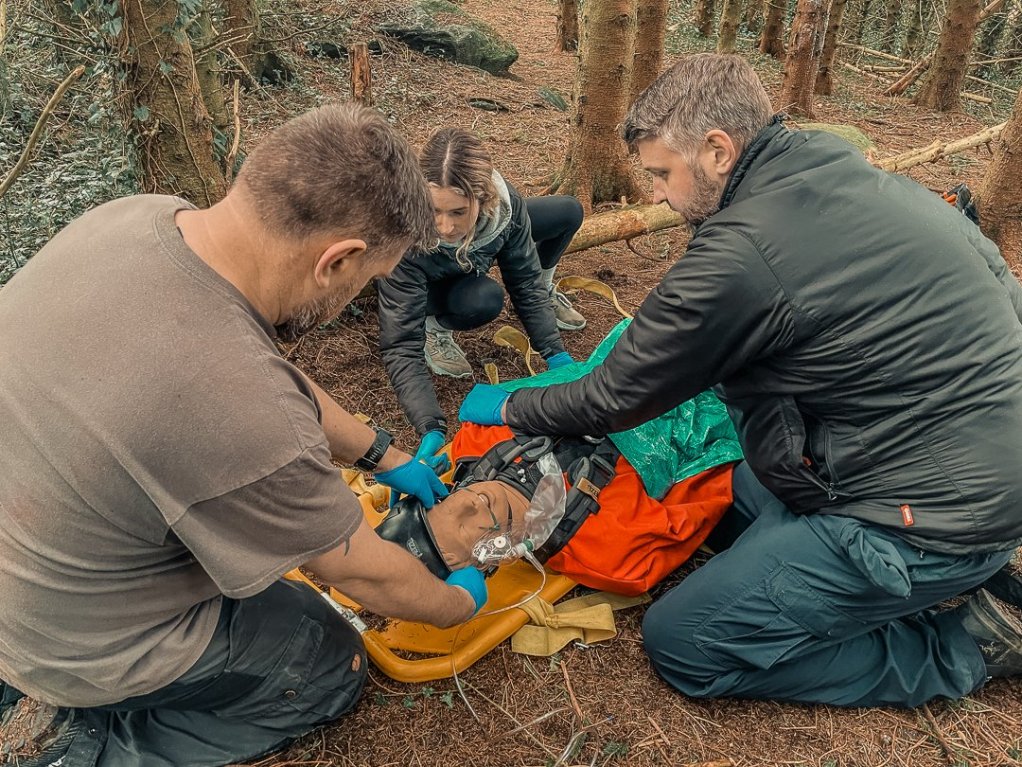
Historically, learners have been trained using rigid, lightweight, fake limbs that don’t feel like a person, or a live ‘casualty’ where the tourniquet can’t be tightened properly. This means it’s likely that the first time the equipment is applied correctly, it’s in an emergency!
Top tips for effective bleed control scenario training
- Skills training – use in a classroom environment first to learn, embed and practise the skills before moving to more tricky scenarios.
- Create challenging scenarios – take the manikin outside in any weather, into a stairwell or toilet, in or under a vehicle, in confined space or awkward position. Change the lighting, add in a second casualty or a terrified relative/friend. The manakin is robust and this means you and your students will get more from the experience.
- Use sound effects – download and play some sound effects such as groaning, screaming, shouting, traffic noise, a nightclub, etc. to make the scenario more realistic, and/or provide some distraction.
- End to end scenarios – run scenarios right through to handing over the casualty, including post treatment monitoring for a period of time. All too often we stop as soon as the required skill is observed; therefore missing an opportunity to develop our monitoring skills and managing of the patient while we wait for help.
- Real life examples – research and use real life examples of times when bystanders use of bleed control skills really did make a difference or could have made a difference. There are quite a few out there.
- Keep your skills up to date – with so much research currently available, make sure you’re up to date on the latest developments in bleed control skills. Outreach Rescue provides several first aid and prehospital medical courses that include bleed management training, or we can create a bespoke course specific for your needs.
Beyond Training – Developing Real Life Skills
We are starting to see positive outcomes in the drive to make bleed control skills as important as learning to do CPR and use an AED. The availability and awareness of public access bleed control kits is also growing, which means that even if you don’t carry the kit around with you, having the skills to take action really could save a life.
“When bystanders and first aiders are confident and proficient in bleed control, lives can be saved.”
Training in the most realistic way possible can only enhance someone’s ability to recognise a catastrophic bleed, have the confidence to make a rapid decision to do something, then act on that decision. Training with the Ruth Lee Trauma Manikin provides a powerful tool to achieve this goal. When bystanders and first aiders are confident and proficient in bleed control, lives can be saved and post incident quality of life enhanced.
Resources
- NCIB Haemorrhage and Survival Times: Medical–Legal Evaluation of the Time of Death and Relative Evidence - PMC
- Nuffield Trust Ambulance response times
- NCIB Hemorrhage control-Proper application of direct pressure, pressure dressings, and tourniquets for controlling acute life-threatening hemorrhage - PubMed
- Journal of Paramedic Practice - Challenge your thinking: mechanical direct pressure device