

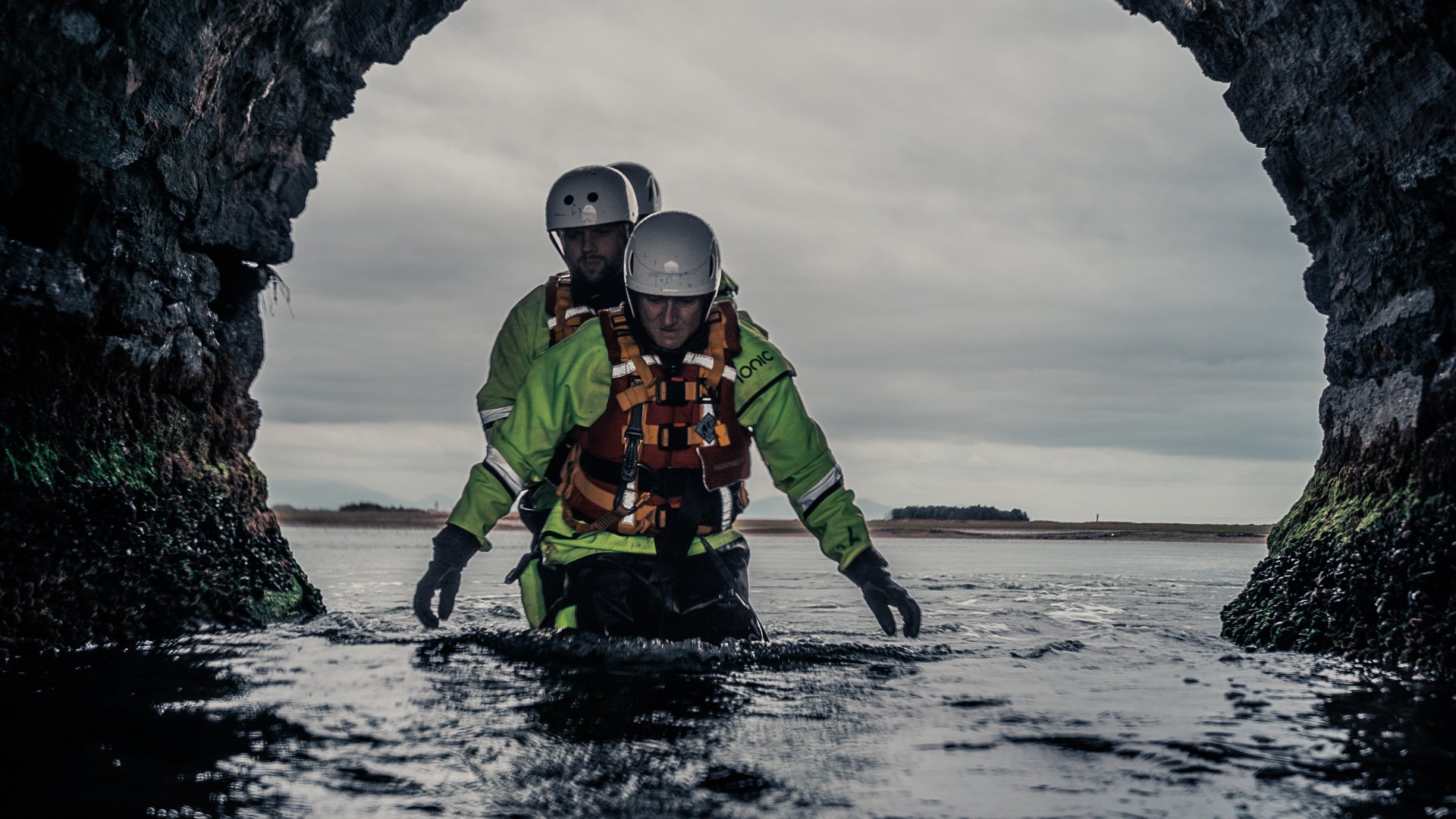
Examining the gap between operational competence and supervisory development in Water Rescue. This year, Outreach Rescue launched a new training product – Water & Flood Rescue Supervisor. This short article explains, in simple terms, why we created it and what gap it is intended to address. If you want the full background and reasoning, you can read the longer article.
Download the full White Paper
Why We Created the Water & Flood Rescue Supervisor Award
Why water rescue supervision needs its own development pathway
Over the years I have had many conversations with services about supervision training in water rescue. A recurring theme is comparison to rope rescue training. In rope rescue training, we offer a Rope Rescue Supervisor training course. People understand what that means, and many recognise the value it adds. A question we are asked regularly is why a water rescue equivalent does not exist.
In the Rope Rescue context, Supervisors develop beyond simply performing operator skills competently. They can demonstrate all operator skillsets, and then build the ability to adapt those skills to different problems. The emphasis is on principles, judgement and being able to adjust systems safely when circumstances are more demanding, rather than adding techniques for their own sake. At Outreach Rescue we often talk about keeping techniques simple, effective and memorable – skills that can still be applied when conditions are poor and people are under pressure.
In water rescue, supervision exists in every team or asset, but the pathway for water-specific supervisory development is less clear. Within a deployed water rescue asset, someone will typically be in a supervisory role – Crew Commander, Team Leader or similar – and those individuals will often have completed service-specific incident command training. What varies between organisations is the extent to which those supervisors receive water-specific supervisory development beyond baseline operational competence.
The limits of classroom and technical progression
Within the national framework, the Asset Commander course provides command learning outcomes through the DEFRA Flood Rescue Concept of Operations (FRCO) and is stipulated as a two-day programme. In practice, it is often delivered in a classroom. The syllabus itself is sound, but flood and water incidents are rarely classroom problems. They involve real conditions and real pressures, and for many people classroom exposure alone is unlikely to be sufficient without contextual application in demanding environments.
Some services seek progression for supervisors through technical routes, and in our experience the Water Rescue Advanced Award has sometimes been used as that progression. It has real value and expands capability in rope-based operations over water, but it is primarily a technical progression and does not mainly focus on developing water-specific supervisory judgement within the in-water environment.
The legal and governance context
There is also a legal and governance driver. The Health and Safety at Work etc. Act 1974, Section 2(2)(c), includes the requirement for “such… supervision as is necessary” to ensure, so far as is reasonably practicable, the health and safety at work of employees. Different services will operate within different legal and governance frameworks, but this provides an overarching benchmark that many organisations recognise. Senior officers understandably want supervisory arrangements that are defensible against that benchmark.
Addressing the gap in applied water supervision
With those factors in mind, we concluded that there was a gap between theoretical command input and applied, contextual water supervision. This is not about criticising existing command structures. Fire and Rescue Service command systems are robust and essential. It is about recognising that water presents specific hazards and behaviours, and that supervisory decision-making benefits from being developed in the environment it is intended for.
How the Water & Flood Rescue Supervisor Award is structured
The Water Rescue Supervisor Award was built from our team’s collective experience of water instruction and supervision, alongside incident management experience and involvement in the earlier development of large-scale flood response initiatives. It is designed as a five-day programme: two days cover the Asset Commander content aligned to FRCO learning outcomes, and three days focus on contextual application in demanding water environments.
Delegates take supervisory roles in realistic Type C scenarios and apply structured decision-making in conditions that reflect operational pressures. The programme includes search content in theory and practice, development of non-technical skills such as situational awareness and decision-making under pressure, and two structured night exercises. It also incorporates Mod 3 reassessment. Asset Commanders are required to renew Mod 3 every three years and complete two days of Asset Commander training, so this integrated programme can align with existing renewal cycles while providing a structured upskilling opportunity.
Practical, progressive supervisory development
The purpose of the Water Rescue Supervisor Award is not to add complexity for its own sake. It is to develop supervisory capability in a way that is practical, progressive, professionally credible and aligned with the national framework.
If you want the full reasoning and detail behind the course design, you can read the longer article: Why We Created the Water Rescue Supervisor Award.
Water & Flood Rescue Supervisor
View course details for this five-day programme, designed for experienced and proficient Mod 3 award holders.
Water & Flood Rescue SupervisorDownload the full White Paper
Read Greg Cain’s detailed reasoning behind the course, its structure and the professional gap it is intended to address.