

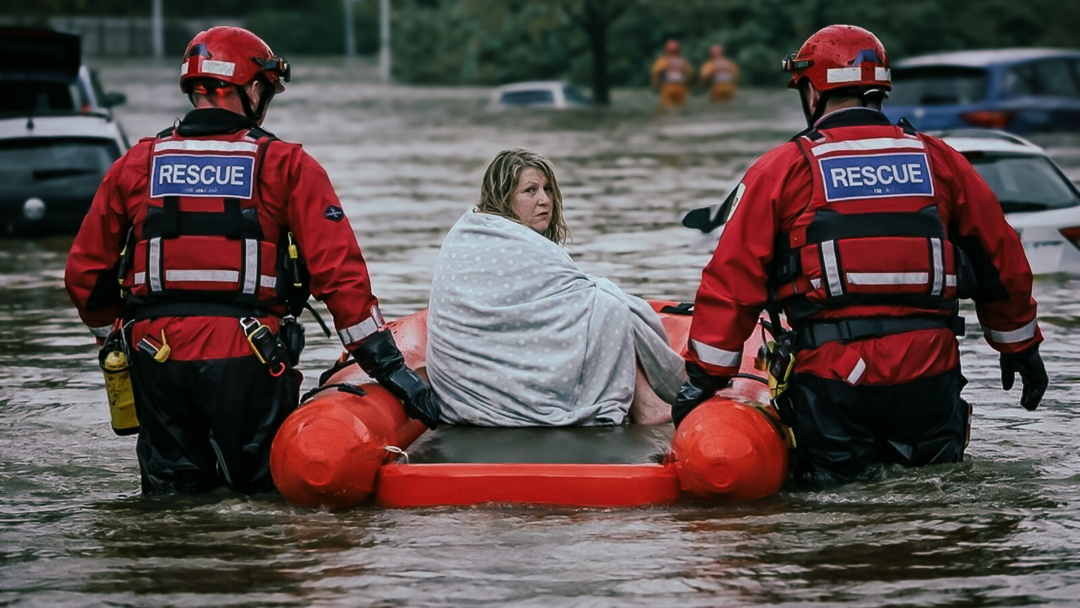
Following the release of the DEFRA Flood Rescue Concept of Operations (FRCO) 2025, Paul Amos reflects on recurring challenges in UK flood response and the role of Water and Flood Incident Manager training in improving safety and command effectiveness.

Outreach Insights
Written by Paul Amos
Water Incident Management Instructor
With the publication of the latest edition of the DEFRA Flood Rescue Concept of Operations 2025 (FRCO), and the continued severity and frequency of flood events across the UK, it is timely to reflect on the management of wide area flood incidents.
In recent years, almost every region of the UK has experienced significant flooding. The consequences for communities and businesses are serious. For emergency responders (whether Category 1, Category 2 or volunteer agencies) these incidents present complex operational and command challenges.
The FRCO 2025 is designed to guide responders in the use of national flood rescue assets. It sets out operating principles, recognised training and equipment standards, and methodologies intended to strengthen incident management. It also serves as the national benchmark for single-site water rescue incidents. In effect, it remains the UK’s only multi-agency, multi-disciplinary and multi-jurisdictional water and flood rescue management protocol.
“The FRCO remains the UK’s only multi-agency, multi-disciplinary and multi-jurisdictional water and flood rescue management protocol.”
The core principles have not changed significantly in over 15 years. It is therefore surprising that many of the same problems continue to surface.
Recurring Challenges in Flood Response
For more than 15 years, Outreach Rescue has delivered the DEFRA Mod 5 Water and Flood Incident Manager course to the emergency services sector. The programme is led by two experienced flood managers, both co-authors of the original FRCO. We have delivered over 150 courses across the UK.
Throughout that time, delegates have shared consistent feedback about how water and flood incidents are managed within their regions. While contexts vary, the themes are often the same.
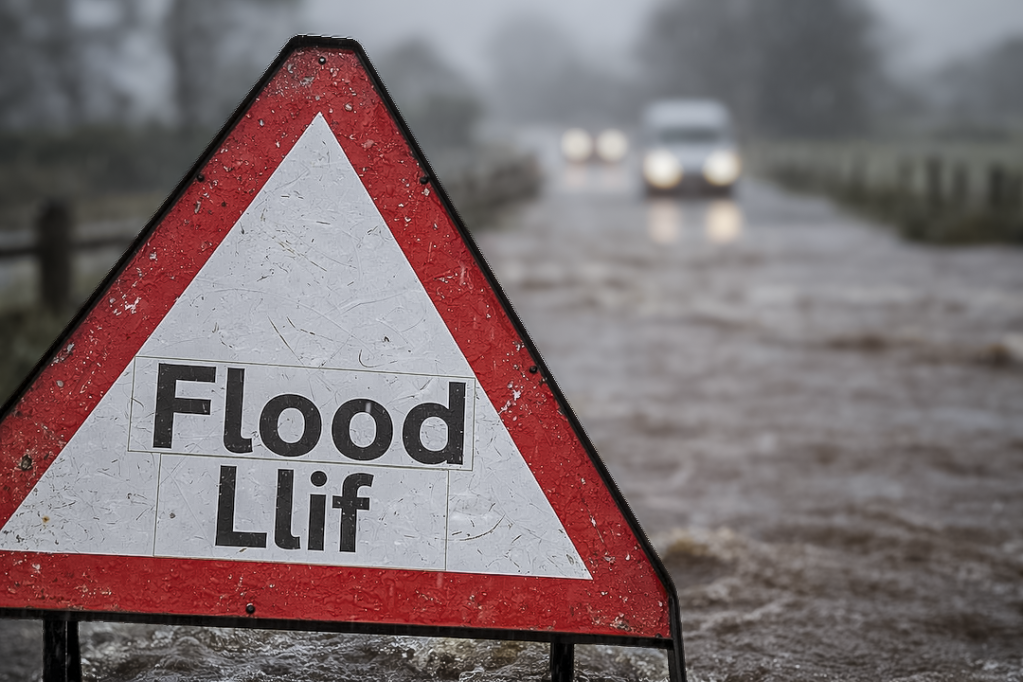
A common concern is limited pre-planning at Local Resilience Forum (LRF) level. This includes insufficient consideration of mutual aid requirements, the number and location of operational command points, and the logistical demands of managing national assets during prolonged events. Flood-specific communication requirements, particularly where voice and data systems sit outside standard major incident frameworks, are also frequently underdeveloped.
Delegates also report gaps in flood-specific knowledge at Tactical and Strategic levels. In some cases, there is limited technical understanding of the FRCO itself, including asset types, capability differences, equipment standards and training thresholds. The use of powered craft is an area where this lack of clarity can have significant safety implications.
Awareness of the support available through the UK FRS National Resilience Advisory Team (NRAT), including Tactical Advisors, pre-deployment cost considerations and effective use of the Strategic Holding Area (SHA), is not always consistent.
- Delays in gathering and interpreting intelligence from available sources
- Failure to pre-position resources ahead of predicted impact
- Inaccurate matching of assets to risk
- Weak or inconsistent situation awareness during extended operations
There are also repeated concerns about failing to identify at-risk communities or vulnerable individuals early enough in the response.
These are not isolated observations. They reflect patterns that appear across multiple regions and organisations.
Understanding the Water Risk Environment

Perhaps more striking is the feedback around the understanding of water risk itself.
Basic factors such as depth, flow rate, temperature, hydrology, in-water obstacles and contamination are sometimes underestimated. There can also be confusion around cold water shock, hypothermia and sub-surface survivability. These misunderstandings directly influence decision-making and the selection of safe systems of work.
“Entering water to perform a rescue is every bit as hazardous as entering a burning building.”
Yet when comparing formal control measures, such as structured tasking, entry control, crew monitoring and debriefing, water incidents often lack equivalent levels of supervision and risk governance.
This raises an uncomfortable question: is water still considered a lower risk than it is?
National Learning and the Visibility of Lessons
Most response organisations undertake post-incident reviews. However, much of that scrutiny is not widely shared. There is no dedicated national water rescue technical group overseeing standards and learning. Flood-specific lessons are rarely prominent in Joint Emergency Services Interoperability Principles (JESIP) reports, at least not to the extent suggested by the feedback we receive from delegates.
The 2025 revision of the FRCO contains limited visible reflection of recent flood experiences. While that does not mean learning has not occurred, it does suggest that opportunities remain to embed it more clearly.
Overall, the evidence would support the view that while UK flood rescue capability has improved significantly over the past two decades, incident management is still not as consistent or as effective as it could be.
The Role of DEFRA Mod 5 Water and Flood Incident Manager Training
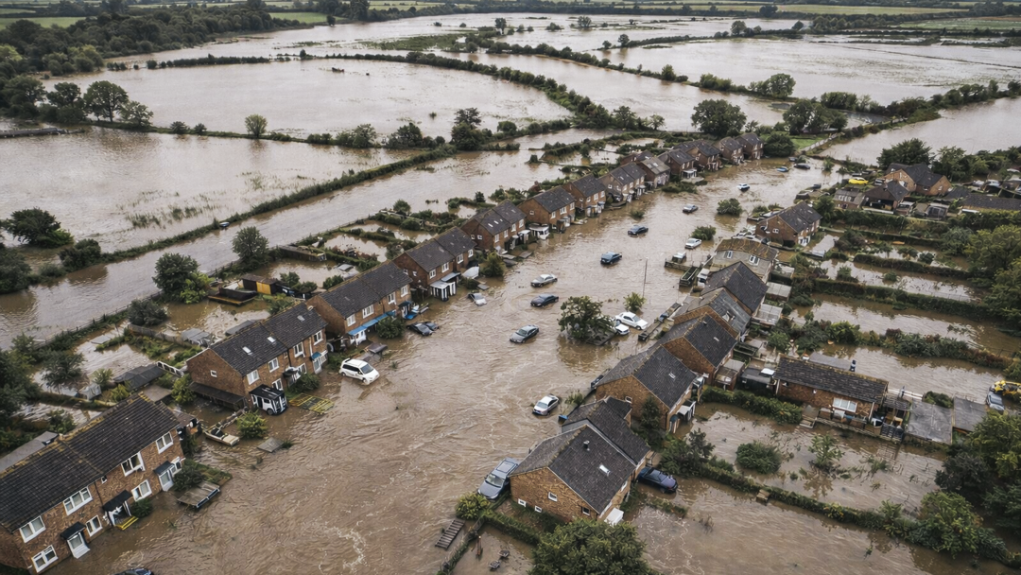
There is, however, strong reason for confidence.
The DEFRA Mod 5 course delivered by Outreach Rescue is designed to equip managers with the knowledge and decision-making skills required to address many of the issues outlined above. The programme is closely aligned with the FRCO and national emergency response protocols, with JESIP principles embedded throughout.
Delegates are prepared to command or advise at both Operational and Tactical levels. The training explores the broader context of water risk, including moral pressure and mission creep, and reinforces the fundamental requirement to match asset to risk.
“The fundamental requirement is to match asset to risk.”
- The management of water-based search operations, including night operations
- Flood characteristics and behaviour
- Use of flood and weather information services to inform planning
- Establishing and running operational command points
- Tactical-level advisory and command responsibilities
The emphasis throughout is on multi-agency coordination and realistic decision-making under pressure.
Maintaining Competence and Strengthening Resilience
A single course cannot guarantee ongoing competence. For that reason, Outreach Rescue also provides recertification and guidance to help individuals and responder groups maintain capability.
Delegates are supported in organising as a cadre, sustaining skills, contributing to policy development and improving flood planning within their organisations. Many go on to influence operational procedures and strengthen preparedness at Local Resilience Forum level.
Twenty Years On: Progress with More to Do
It is now 20 years since the original Chief Fire Officers Association (CFOA) Managing Major Flood Emergencies project introduced standards and protocols that became the foundation of the DEFRA FRCO. In that time, water rescue in the UK has become significantly safer. National assets, defined standards and structured training have made a clear difference.
“There is much to celebrate – and more still to improve.”
However, some principles appear to have faded from focus, and certain lessons have not been fully embedded.
Flooding is unlikely to reduce in frequency or impact. The opportunity now is to reinforce core principles, close knowledge gaps and ensure that water and flood incident management continues to evolve.
Water & Flood Incident Manager Training
This course for personnel required to advise or command at water and flood incidents will train participants to identify, select, develop, and manage appropriate tactical and operational plans.